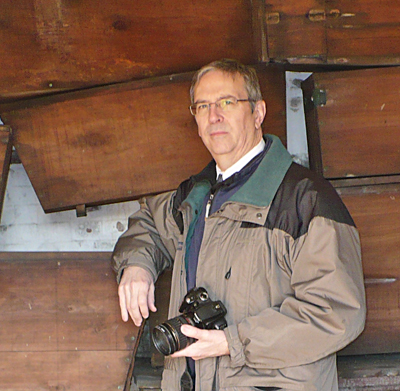
Wednesday, May 30, 2012

What's Buried in that Graveyard?


I mean, besides the obvious stuff. I was rather shocked to find out from a cemetery grounds keeper friend of mine some of the things that he and his workers find on the grounds. Now, I’m not talking about some abandoned graveyard out in the woods, but rather a nice well-kept, city cemetery. The cemetery in question is large enough that visitors can easily drive a little way and be out of sight of the people in the office.

When you or I walk through the occasional cemetery, we’re not inclined to notice something that was not there yesterday – a small mound of dirt, an item sticking out of the ground. But people whose job it is to care for the monuments, the stones, and the grounds DO notice such things. And they’ll typically remove them.

Voodoo doll, Atlantic City Cemetery
The typical voodoo dolls are found, to be sure, along with the dead chickens. I’ve seen these too, but there are creepier things. One time my friend saw something sticking up a bit out of the ground near a grave. Upon investigation, he pulled out a three by ten-inch parcel wrapped in a scarf. He was curious, so he unwrapped it. Inside were two face-to-face Barbie-type dolls, naked, with coins and pieces of broken mirror between them.  One had a pin stuck in her.   

Another time, he found a plastic shopping bag full of dead headless chickens – in full feather − with a note tied on saying “Neptune.” He assumed this was done by one of these whackos whose job it is to warn us about space aliens – until he read in the newspaper the following week about Yvon Neptune, Haiti’s imprisoned Prime Minister. Probably had to do with that governments’ (2004) crackdown on voodoo priestesses (I’m not making this up!).

Snake Handle, compliments of Angela Dellutri Photography
Then of course there was the jar of dead snakes he found, swishing around in some liquid, the large jar just sitting on a headstone. All of this stuff, obviously related to voodoo spells, curses and conjures. According to PlanetVoodoo.com, "Snakes are a common subject in the realm of hoodoo and folk magic. Their uses range the gamut from good luck to retribution, and the omens assigned to them as equally as varied." Now keep in mind, this was not in New Orleans, it was in Philadelphia. Whatever the locale, a graveyard is a popular place for voodoo practitioners to enlist the aid of spirits (of the dead) to help with spells. (Check out this video posted by one intrepid cemetery explorer, and see what he found in a cemetery in New York City!)

Even more disturbing than finding snakes in a jar must  have been when the cemetery groundskeeper at Holy Cross Cemetery in Colma, California found the human hearts in a jar in 2010. (You can read about that in more detail in one of my previous blogs, "Human Hearts Found in Jars in Cemetery.")
"Police opened up one jar and found a human heart with the photo of a young man and woman pinned to it. Nearby was a second jar with the same contents, but bearing a photo of a different young man and woman. Officers also found partially burned cigars and candles…"
-The Oakland Tribune, 10/22/2010
Though I’ve never personally found snakes or hearts in jars, I started thinking about the weird stuff I have come across in fifteen years of cemetery travel, and wondered what other people had found. So I began a Facebook Group called “Unusual Cemetery Objects,” and encouraged people to post their findings. I was kind of hoping to tap into the experience of the cemetery groundskeeper, but so far, they are a shy bunch. I assume this is partly because cemetery managers would rather not make it known to the general public that jars of snakes had been found buried on the grounds. Still I encourage those people to add such findings to the comments at the end of this blog – if you’d rather maintain anonymity, email me and I will add your comments.

So this blog’s title phrase “buried in a graveyard” can also refer to found objects only figuratively buried, i.e. hidden from the public eye. When I asked people about the “Unusual Cemetery Objects,” they’d found, I did get some unexpected responses. While people certainly photograph odd-looking monuments and casket vaults, they typically don’t photograph the surprising things they come upon, like homeless people or nude model shoots (both of which are fairly common).

Here is a list of a few things people posted on my Facebook Group page, “Unusual Cemetery Objects:”
  •          stack of blankets and a comforter in a bricked in plot (homeless people apparently camped there)
  •          bullet holes in ceramic death portraits
  •          helium balloons tied to headstones in Scotland
  •         a dead body … came across police investigating the body of a dead prostitute
  •          a music video shoot with model and fog machine  [popular with the Goth set – ed.]
  •         a casket key         skeleton gloves in a trash can
  •         a headstone where a local serial killer scratched his name on the back
  •         grass that won’t grow on a plot
  •          the top of a skull in a pit in Pere Lachaise
  •         goat’s head
  •          Someone ELSE putting flowers on YOUR loved one’s grave!
That last one might just be the most unnerving! Which goes to show that there’s a world of life in cemeteries that we don’t normally see.

Headstones appear inside fallen tree!
When I read one person’s comment about the skull at Pere Lachaise, I was reminded of the human teeth I found in the Metairie Cemetery in New Orleans. I scooped up a handful of the gravelly walkway material because I thought it looked like broken up seashells, which it was, mostly, but there were also a half dozen teeth in my hand! (Once you learn about the above-ground burial techniques common in the area, you realize this is not unusual. But still ….)

Stuffed lynx (or perhaps an ocelot?) with garden furniture inside mausoleum!
Dead fox, Mt. Moriah Cemetery, Phila.
I’ve seen animals in cemeteries, live and dead. And bones. Bones are a strange thing to find in a graveyard, which is kind of funny and ironic when you think about it. I once found a pile of animal bones in the shape of the skeletons of the animals, probably wild dogs. They laid there along with three skulls of roughly the same size. They either fought each other to the death or this was the ancient wild pit bull burial ground.

Who knows what evil lurks?
One of the oddest things I ever saw in a graveyard was a freshly-dug, two-foot-square cement-filled hole, with a dog's footprints in the cement! This was among other graves in an abandoned cemetery. Kind of reminded me of an old, hand-painted plywood sign that used to be on the fence at Evergreen Cemetery in Camden, New Jersey, which said, "No unauthorized burials permitted."

But really, what’s the worst possible thing you can find in a graveyard? Yeah, the hearts in a jar was pretty gruesome, but compared to the horrible things living people do to each other, it’s nothing.

Acknowledgements:

Thanks to Angela Dellutri for the use of her Snake Door Handle photograph.

Wednesday, May 23, 2012

Stuck in a Photographic Rut

I was in the supermarket a couple weeks ago with my wife and child when we bumped into a friend of ours. Maria is a photography professor at one of Philadelphia’s art colleges. We’ve been friends for several years and I greatly admire her work as well as the historical retrospective photography exhibits (link at end) she has produced and curated.

She told me how much she enjoys reading this blog. I was grateful, a bit embarrassed, and curiously, I began to feel guilty for not spending much time writing about photography. (I also feel guilty about not updating my PhotographerCoach.com website in forever!) 

"Rocky's" deceased wife, Adrian
I started thinking about the fact that in my blog, I’ve gravitated toward using photography as a means of documenting things, to prove I was there – the real world. Originally, I would write about a particular fine art photograph that I made, how I made it or perhaps the details related to my bringing it into existence. Now, the photographs at times do no more than punctuate my words. As a result, my photography recently has become more journalistic than fine art. The images are not exactly snap-shoddy, but they have veered off my intended path. While it’s true that I’ve continued to enter some juried art shows and attend events to sell my work, these mainly involve older images.

Available at Amazon.com
I suppose I could just continue the documentary-style photography and hope someone will archive it all into a book like Michael Lesy did with Charles Van Schaick’s Wisconsin Death Trip. But I REALLY like making fine art photographs! It’s a way of creating fantasy out of reality for me. So how do I get back on track with what I truly like to do? Or better yet, achieve a better balance between the fine art images and the documentary photos?

I began thinking about a presentation that my friend Maria made a few years ago to the Photographic Society of Philadelphia. The presentation was a slide show and lecture about her recent trip to Italy. Maria creates wonderful fine art photography. Her images in the presentation, however, were travelogue photos of the Italian countryside and its people. Hers are the type of travel snapshots you would expect a seasoned professional photographer to take. Maybe I need to hone this skill.

"Death" in the English Cemetery
Travel, of course, is a great way to get your creative juices flowing. I was in Italy too, a few years ago, but only came back with tombstone photographs! While the English Cemetery in Florence was beautiful, perhaps I should have looked at the rest of the beauty around me. (If you’re a cemetery photographer, by the way, Italian sculpture has everything else beat!)

Get Out of Your Element

Making photographs outside your usual stomping grounds is certainly a good way to get your creative juices flowing. However, you don’t need to travel all the way to another country for a change of scenery – often such new experiences appear in your own back yard. For example, I attended the Kinetic Sculpture Race in Philadelphia’s Kensington neighborhood recently to enjoy the festival and take photographs. Even if a certain kind of art is not your forte (e.g. building bicycle-powered vehicles), you can still get ideas from other people’s creativity. After seeing the Amish buggy, I realized that I should make a trip to Lancaster, Pennsylvania to see what Amish graves look like. Hmmm. Never even thought about that! In addition to the wonderful vehicles, the woman standing next to me in the crowd was a member of the Dumpster Divers of Philadelphia, a group of artists who create art out of trash (I’d always wondered what those people looked like!). When you talk with artists who work in a different medium, your own creativity can be stimulated.

If you feel like you’re in a rut and want to get out, there are all sorts of catalysts standing by, waiting for your call. Travel is just one of them. A photographer can learn things by hanging out with other photographers, but why limit yourself? While I certainly expect to learn some new things when I attend the AGS (Association for Gravestone Studies) conference next month, I already live in this world. It’s useful to jump the rails and land in an entirely different sphere every so often. You can learn things from wildly disparate sources, like seeing how the arts and crafters display their wares at art shows and talking with painters and sculptors about how they create. Such experiences help you see things from a different perspective. Everyone has artistic skills to share – for instance, I’ve gotten useful get tips about marketing my work from a friend who is a competitive BBQ chef.

Amish zombies at Kinetic Sculpture Race
Not being an academically-trained artist, I need all the help I can get. In my quest to create more of a balance between my documentary photography and my fine art work, I like to refer to those who have gone before me, to learn from their experience as well as my own. A reference I recently stumbled upon is Deanna Wood’s “Emerging Artist” blog. She has an archive called “Helpful Posts” which covers many of the anxiety-producing details that artists find themselves dealing with. Topics include “Hanging Artwork,” “Writing an Artist’s Statement,” “How Galleries Choose Artists,” and my personal favorite, “Rejection.” Since you REALLY would like nothing more than to just create your art, it’s helpful to have these essential things laid bare in front of you. Eliminating the guess-work of the real world helps me to concentrate more on my make-believe world.

Saturday, May 12, 2012

Vote for Woodlawn Cemetery!


Over the years I’ve visited Woodlawn Cemetery in New York’s Bronx borough a few times, and it is a magnificent place. If you’re a cemetery photographer, it is a must-see. It’s one of the first cemeteries I found myself accidentally locked in, and oddly, the first cemetery I later intentionally allowed myself to be locked in, just so I could photograph the magnificent statuary! (Read more about that at the link below.)

For me the cemetery brought about other firsts – the first grandly opulent cemetery I’d ever seen where the statuary, landscaping, and mausoleums were laid out (pun intended) to breathtaking effect. It was all so precise yet natural − the first classical ‘garden’ cemetery I’d seen that was in such perfect condition. Woodlawn was also the site of my first paranormal cemetery experience (and you can read about that here), brought on by my desire to photograph this angel statue. 

The gargoyle detail you see above is from the cemetery's Belmont mausoleum (near the Jerome Avenue gate) - arguably one of the most fascinating mausoleums on the planet. It is a full-scale replica of the Chapel of St. Hubert in France, designed by Leonardo Da Vinci in the “Gothic Flamboyant” style in the early 1500s. The structure is the size of a small church and was the reason for my accidental lock-in all those years ago.

I’m telling you all this for two reasons: 1) you should visit; and 2) Woodlawn is competing with forty other New York City sites for a grant award to help with funding and restoration projects – and they can use your vote!

The cemetery is participating in the Partners In Preservation program, an initiative to give away three million dollars in New York City. Sponsored by  American Express and the National Trust for Historic Preservation, Partners in Preservation is a community-based program which provides preservation grants for local historic places. If you’ve ever been to Woodlawn and experienced its splendor, you’ll want to vote for them! So please take a moment to do so now: Vote!

Woodlawn Cemetery website
Read: Locked in and Climbing Out
Read: Voices in the Cemetery

Thursday, May 3, 2012

2nd Anniversary of "The Cemetery Traveler!"


Well, it’s been two years since I began writing The Cemetery Traveler blog. That’s most of my two-and-a-half year-old daughter’s lifetime – a fact that puts all that work into startling perspective for me. I’ve posted 120 articles and have 144 regular subscriber/followers. I greatly appreciate the fact that you’re reading this and hope you will continue. 

Daughter Olivia at Laurel Hill Cemetery
After 120 blog postings, you might think I’ve run out of material, especially since these postings have not been just a photo and a few sentences. They’ve been more substantial than even I expected they would be. The articles began as short pieces, but then the content took on a life of its own. I began to get carried away – the blogs started to read like mid-career Dickens. Frankly I’m surprised they held peoples’ attention. But readers responded. In blog comments and private emails, they expressed opinions. Many of the most commented-on pieces were about abandoned cemeteries.

When I started The Cemetery Traveler, my intent was mostly to recount my past experiences traipsing through the graveyards of America (and Europe), camera in tow. However, through Facebook I’ve encountered new ideas, new friends, and made new excursions. I’ve written (or will write) about a variety of people with whom I’ve had interactions in reference to my blog – a psychic, a film maker, descendants of people whose graves I’ve photographed, Andy Warhol’s niece and nephew, Victorian-era and Civil War re-enactors, and fellow writers. I’ve also met new companion adventurers (or ‘gravers,’ as we’re sometimes called!).


Ed's photograph in "175 Years of Reflections"

On rare occasion, I actually wrote about photography (e.g. my blog about ‘painting with light’ in a cemetery at night). This past year saw the publication of the book, 175 Years of Reflections, Laurel Hill Cemetery, which one of my photographs was chosen to be in. The book celebrates Philadelphia’s Laurel Hill Cemetery and its 175th anniversary.

Abandoned Cemeteries

Probably one of the least expected results of the The Cemetery Traveler blog has been my interest in helping to restore abandoned and run-down cemeteries around Philadelphia .

Mt. Moriah Cemetery, Philadelphia
Initially, I started exploring and photographing them like they were carnival sideshow attractions. However, my postings generated quite a bit of heated discussion, mostly from the “how could they let this happen” crowd, but also from descendants of people buried in those cemeteries! I received messages like this (related to Philadelphia’s gigantic abandoned Mt. Moriah Cemetery):

"Mount Moriah holds different emotions for different people. I have family here. As a child in the 70s, I actually played and rode my bicycle with my friends in this place. The people buried here need people to speak for them and try to undo the damage that has been done to them. Help us to do that with your lens. And if you are adventurous, come to a clean-up. They are inspiring and lets those buried here that someone still gives a damn."

Primarily as a result of people commenting on my blogs, I have participated in several clean-up days, and the comment is correct – the work is inspiring.

Tombstone under Betsy Ross Bridge
I also received many comments and emails about the destruction of Monument Cemetery (Philadelphia, 1956), and the unceremonious dumping of its thousands of headstones into the Delaware River. I received dozens of emails from descendants, looking for traces of their ancestors. The stones can still be seen under the Betsy Ross Bridge (at low tide), so I photographed them, and added the names, dates, and photos of the stones to the online database at FindAGrave.com, as suggested by one reader, whose initial comment to me was:

"While their graves may never be found, their information would be of great interest to family, historians, and genealogists."

The majority of comments  related to the destruction of Monument Cemetery were of this nature:

"I came across your site while trying to locate this cemetery so I could visit my ancestors' tombstones, as many of them were buried at Monument. I feel a bit sick realizing they're now in a mass grave and their tombstones have been dumped like this."

"I join many of those who are horrified that this could have happened in Philadelphia during the 1950's.  It seems so disrespectful and almost sinister in that advertisements were not required to be made in the newspapers if relatives could not be reached.....I think my family, especially my grandmother would have rallied the family (a large one) to relocate the graves of her mother, aunt and grandparents.  I gave a presentation of our family history at our reunion a year ago and my generation was horrified at what we discovered about the cemetery."
  
Opinions on the travesty of Monument Cemetery ran to the other extreme as well:

"I understand that moving a cemetery for parking seems crass, but the world belongs to the living and the not-yet-living - and Temple [University] has been and remains the most-affordable, best-hope for higher Education in Philadelphia. Isn't that worth more than a decaying cemetery?"

Some people were upset that I wrote about the cemeteries in their neighborhoods in a sensationalistic way. It got peoples’ attention, though, didn’t it? I am sure it helped with public awareness and the need to restore, rehab, and care for what we have.

What’s on The Cemetery Traveler’s  event horizon?

So what is on The Cemetery Traveler’s event horizon for "Year Three" of the blog? Well, a few things.

  • Publish a book of selections of essays from The Cemetery Traveler blog. I expect this to be available in about six months, with eBook versions on Nook  and Kindle. I have to thank the observant reader who commented on this photo a while back, “This photo screams ‘Book Cover’!”
  • Pay closer attention to comments made and emails sent by my readers, as your feedback adds another dimension to my writing. That said,  I’ve not been prompt with my replies. I’ll do better – or at least the best I can with two-and-a-half year-old vying for my attention! 
  • More travel! I plan to have a vendor table at the AGS (Association for Gravestone Studies) Conference in West Long Branch, New Jersey on June 22, 2012. Hope to become a member and interact with the conference attendees. I’m also planning to visit some of the historic cemeteries in Charlotte, North Carolina next month.
In Conclusion…

An advantage the living have over the dead:  we can go to sleep at the end of a long day, then wake up and do it all over again. So, shall I keep on writing? In the words of author/screenwriter S.J. Perelman, “To the fiery temperament, decision is consonant with action.” In other words, I intend to continue shooting off my mouth without thinking. Stay tuned – all shall be revealed.

Friday, April 27, 2012

Celebrate Arbor Day – Chop Down a Tree!

This past Saturday, I was part of a city tree-planting group of volunteers that planted ten new trees on our block in South Philadelphia. One was alongside my house. Later that afternoon, I helped a different group of volunteers chainsaw a cluster of wild trees that had grown around and were crowding out a mausoleum at Philadelphia’s Mount Moriah Cemetery. I didn’t really see the irony in this until I noticed on my calendar that Arbor Day (April 27, 2012), our national tree-planting holiday, was less than a week away!

Excavating mausoleum from arboreal prison
I arrived late at Mount Moriah that Saturday, due to my earlier planting commitment. One group of volunteers had just gone, while a half-dozen diehards continued the hard work. All the grasses and vines had been cleared from the right side of the structure, and several trees had been downed from the left side. Over the next few hours, we chainsawed about a half-dozen more trees, dragged them out of the thicket with a small tractor, and hacked all the branches off them (so they could later be chipped by a tree-cutting service).

I was amazed at the number of people in both groups – the cutters now, the planters earlier. The drive, dedication, and the amount of energy these people directed toward their goal was wonderful and infectious. Arbor Day, forward and reverse!

From the City of Philadelphia website:

Keep Philadelphia and your community beautiful, plant a tree.
Trees bring a multitude of benefits ranging from decreased air pollution, stormwater runoff and extreme temperature days to increased property values, carbon sequestration and quality of life.
Many of Philadelphia’s neighborhoods lack adequate tree cover. GreenPlan calls for Philadelphia’s tree canopy to increase to 30 percent in every neighborhood by 2025. To support this goal, Greenworks Philadelphia sets a target of planting 300,000 trees by 2015. It’s an ambitious goal, but a goal we can strive for together as a City.
Trees in summer offer cover for spray-painting vandals
While on one hand it seems that the city is attempting to reach a place Carlos Casteneda only dreams about, it also sponsors a project to hack out an abandoned cemetery from its jungle confines. The former to promote life, the latter to, well, celebrate life.

Mt. Moriah Cemetery at sunset
Both endeavors had merit. One part of the city needs to be greener, the other, well, less green.  Now don’t get me wrong – I’m the world’s biggest fan of cemetery trees. They can add a certain je ne sais quoi to a photograph as a spooky compositional element that is hard to beat. However, Mount  Moriah Cemetery in Southwest Philly is simply a jungle. After thirty or more years of unrestricted florid overgrowth, the place cannot be enjoyed as it was meant to by its Victorian landscapers and designers.

As the cemetery has been abandoned by its legal owners, groups of concerned citizens have taken it upon themselves to thin out the thousands of random trees and keep the weeds and vines cut. It’s going to take a lot of work to repair the damage to the monuments and other structures that the trees have wrought, but first the trees must be removed.  Four hundred acres of wild vegetation is quite a challenge. The photos at right and at the top of this article are fairly common sights in the heavily-wooded sections of the cemetery.

Cut trees at Atkins mausoluem
Which is funny when you think about the overgrowth – when you try to purposely grow plants, they seem to just have a death wish. You try to keep that azalea alive or nurse the insect-ridden holly back to health and you swear they just want to die! You feel as though you’re just prolonging their agony, keeping them going by artificial means. For instance, I know I’ll be fertilizing and watering the new tree alongside my house for the next year, hoping the roots will take hold. However, there’s every possibility that it could just shrivel up and die. Worse yet, the jackass vandals who set a candle burning on the roof of my convertible may just rip the branches off this tree. As for the cemetery tree-clearing, there’s every possibility that once the mausoleums and monuments at Moriah are exposed, vandals may tag them with spray paint. All you can do is the best you can do.

Pulling cut trees with tractor and chains
What may save the cemetery, however, is the simple fact that more people are spending time there. If vandals see other people, they’re less likely to commit criminal acts. Also, fewer trees mean less cover for the criminal element (see my previous blogs listed at the end of this article for further reading), so thinning out the trees may result in less defacement and damage.

From the Friends of Mount Moriah Cemetery website:

Next Mount Moriah Volunteer Cleanup – May 19, 2012
Join the Friends of Mount Moriah Cemetery on May 19th from 8:00 AM to 1:00 PM for a cleanup event at the cemetery. Friends, relatives, historians and anyone interested in Mount Moriah Cemetery are asked to meet at the Yeadon entrance to the cemetery on Cobbs Creek Parkway starting at 8:00 AM.

Further Reading (Mount Moriah blog postings by Ed Snyder):

Beginning to Die - The Strange State of Mt. Moriah Cemetery

No One Hears an Abandoned Cemetery Scream

Mount Moriah Cemetery, on the Cusp

Pit Bulls, Deer Ticks, and Poison Ivy – The Allure of the Abandoned Cemetery

Mt.Moriah Cemetery Rising from the Dead?

Thursday, April 19, 2012

Wingless Angels


I had a lovely interaction with one of my Facebook readers last week. She saw the serene, snowy image above after I had posted it on Facebook and recognized it as the statue at her family plot – the statue her great grandfather had sculpted around the 1930s!

Here’s part of her original message:

"Dear Ed, I recently Googled statues located in Holy Cross Cemetery [Yeadon, PA,  on the southwest border of Philadelphia] …. One image completely stunned me. It was a partial view of a large stone angel taken in winter, seen here. I am pretty sure this is my family's angel statue - she is leaning on her arm reading a book - that my great grandfather sculpted for the family plot over 80 years ago. How wonderful to see this image included in your photos. Thank you."

The writer’s description of the “large stone angel “ didn’t quite fit the photograph - the stone angel on the left side of the image is not really that large. I replied to her that the figure to the right is not an angel. 

Her reply was rather interesting:

"She isn't really an angel as she doesn't have wings but we have always called her that. She is really a mourning lady sitting down with her head in her hand reading a book. It was sculpted over 80 years ago. She is over our large family plot that actually holds 8 to 12 spots. Thanks so much for your beautiful work!"

I've heard people refer to wingless figures as angels before. In fact, the Warner Memorial (shown here) at Laurel Hill Cemetery in Philadelphia is usually described as the angel of death (wingless woman at left) releasing the soul of the deceased to the heavens.

Warner Memorial, Laurel Hill Cemetery, Philadelphia

Initially I asked the writer if her great grandfather had been a local sculptor, to which she replied:

"My great grandfather came from Italy in the late 1800's and he worked in all types of stone as a mason and sculptor. He worked on statues for St. Rita's and St. Monica Churches in South Philly and monuments for cemeteries. He died in 1939. Unfortunately, we don't know exactly which sculptures they are but I've come across some very old pencil sketches from my great grandfather, that my dad had rolled up in a closet, and they look like planned architectural features you see on churches. We may be able to track down some of those features on those churches and match them to the sketches."

I enjoyed being part of this story, albeit in such a small way. I offered to send her a copy of the photograph, and she was very appreciative, adding, “your beautiful work takes me to so many cemeteries I may never get to.” Its amazing how rewarding cemetery photography can be when others find such meaning in your work.

Saturday, April 14, 2012

What do you want on YOUR tombstone?

Pizza commercials aside, ten years ago I thought it unnecessary for me to have a tombstone, or a grave marker of any sort. Kind of selfish of me, I suppose, since I spend so much time photographing, reading, and researching other people's tombstones! I just figured, cremate me and throw my ashes to the winds (or better yet, pour them in the gas tanks of cars owned by people who really pissed me off in life!).

I’d also felt that there was a bit of vanity associated with cemetery memorials, especially the gaudy mausoleums. Would I mmortalize myself in stained glass, for instance? I’m a lot of things, but vain isn’t one of them. However, I just finished reading Douglas Keister’s novel, Autumn in Summer, and I now am thinking that maybe I would like a tombstone.

Available from Amazon
Keister is a photographer of cemetery monuments, who happens to also write eloquently and prolifically about them. In fact he has thirty-nine books to his credit! His glossy coffee-table book, Going Out in Style catalyzed my interest in photographing cemetery objects about a decade ago. In his current book, a mystery novel,
Keister incorporates many of the things he's learned about cemeteries in his travels. It's quite interesting reading for the taphophile.

There’s an interlude in the narrative of Autumn in Summer where the protagonist states to a cemetery worker how he doesn’t want a tombstone when he dies. The worker tells him that while it doesn't matter whether you get cremated or buried:
"You need to leave your name behind somewhere. Cemetery's just a spot where you're better assured permanency. While there might not be much left of your physical remains, seeing your name on a piece of stone gives your descendants a better sense of who they are. We need to leave our name somewhere. People need to come to a place to remember us, to connect to us, to connect to themselves, to connect to the past and the future... People come thousands of miles just to see a name, to make that connection."

Author with Friend
I am reminded of the situation involving my research on the discarded tombstones from Philadelphia’s Monument Cemetery. My writing has inadvertently put me in touch with many people who are looking for a trace of their ancestors. When the cemetery was condemned and demolished in 1956, thousands of bodies were removed and reburied in mass graves in a suburban cemetery (Lawnview Cemetery in the Rockledge section of the city), without so much as a plaque indicating their presence. Their thousands of headstones were dumped into the Delaware River, to be used as a foundation for the Betsy Ross Bridge. So for people looking for physical traces of their ancestors, there are none to be found. I guess I don't want this to happen to me.

So I thank Mr. Keister  for allowing me to think of headstones in a different way. As he puts it, a mechanism that will allow me to leave a tangible trace of my existence so that loved ones, friends, and curiosity seekers have a place to land when they want to think about either me or their own mortality.

So what would I like on my tombstone? Keister says,"You only get one chance to make a last impression." Maybe I'd like some weird sort of statue? Or a photo of myself on a simple stone? How about an epitaph? Maybe some pithy phrase or some strange symbols I’ll  make up just to mess with people’s heads? Something like this, perhaps:

Given my penchant for trespassing, maybe an appropriate engraving for me would be:

Ed Snyder  1958 - ____
“Forgiveness is easier to get than permission.”


References and Further Reading:
Douglas Keister on Facebook