Showing posts with label monument cemetery. Show all posts

Sunday, April 13, 2025

More Graves Unearthed on Temple's Campus

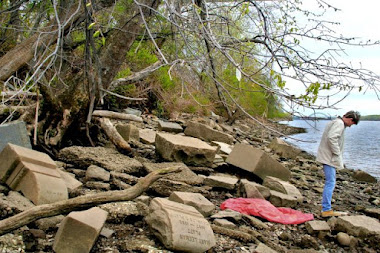
On April 11, 2025, the news announced that coffins and human remains were found during excavation for a new building on the Temple University campus in Philadelphia. Temple supposedly expected this. And they should have, since this former parking lot at Broad and Berks Streets had been home to 28,000 graves. Its kind of odd how NBC reports that the bodies were relocated in the 1950s to Lawnview Cemetery in Rockledge, a northeast Philly suburb. Well, obviously not all the bodies. The gravestones were not relocated there – they were dumped into the Delaware River.

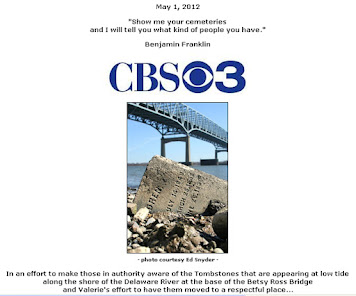
Gravemarkers along the Delaware River, under Betsy Ross Bridge

Like so many other sites in Philadelphia formerly occupied by burial grounds, buildings that require deep foundations are seldom constructed. Guess why. Typically, a playground, ball park, or a parking lot is built on the land. Temple shelved plans for building a new football stadium where their Geasey Field is, most likely, because they were afraid to unearth graves. That complicates things. The current excavation has stopped. Temple was prepared, says the news, and immediately brought in the police, Philadelphia Coroner’s Office, a medical examiner, and an archeologist. 

Slogging around in the mud at the site I really had a sense that I had trodden on sacred ground. When we bury our people, we are bequeathing their remains to the earth. Handing it down, so to speak, in a reverent manner. This is not like throwing out the trash. When a cemetery is vacated, repurposed, not everything can be removed. It is just not possible. Remnants, no matter how small, remain. Bone fragments, coffins. 

When I reached into the mud to pick up a few pieces of the stone that had been broken away from the old cemetery wall, there was mud all over my hands. I got a jarring feeling as it covered my fingers – this is the same soil that held 28,000 bodies in 1956. 

Its like what Mark Twain said when he visited the Holy Land in 1867: you don’t need to be a Christian to realize and respect that something significant happened here. 

Current construction showing cemetery wall that borders North Broad Street

Why has Philadelphia abandoned and moved so many cemeteries throughout its history? We put forth great effort to memorialize ourselves, only to find that our monuments to immortality have not stood the test of time. As the city grew, cemeteries were unceremoniously destroyed. People actually now make stipulations in their burial contracts that their remains shall never be disturbed. There are, however, some recent and ongoing success stories in and around Philadelphia, where faltering cemeteries have been stabilized and restored by volunteers. Is it because we now care more than we used to?

Barnes and Noble link to preorder 
I cover many of these topics in my new book, Abandoned and Forgotten Cemeteries of Philadelphia and its Environs (Fonthill, 2025). In fact, what happened to Monument Cemetery is covered in great detail, with many photos of the gravestones under the Betsy Ross Bridge. One of them graces the cover of the book. (You can preorder the book from Amazon here - publication June 30, 2025.) In addition to the removal of cemeteries, the book – and upcoming public presentations –  will focus on recent discoveries, the frequent accidental unearthing of human remains, genealogical challenges, and the 200 unmarked burial grounds that silently sleep under Philadelphia’s streets, parking lots, and playgrounds. Ben Franklin said, “Show me your cemeteries and I will tell you what kind of people you have.”  

It will be interesting to see how this situation at Temple plays out. The coffins and bones were found about six feet below the surface of the original parking lot. As we all know, burials can be stacked. There could be layers of coffins deeper down. I am curious about Temple’s “protocol,” as they call it, for when human remains are found. I am curious about Temple’s “protocol,” as they call it, for when human remains are found. In Philadelphia, if the remains are found on private property, the landowner (in this case Temple University) does not own any human remains interred in that land. Under Pennsylvania law, such remains are under the control of next of kin/descendants and the courts. In this case, one would expect that Temple would have needed a court order to disturb these burials.

Original cemetery gatehouse on Broad Street

The plot of land where the discovery was made is to be the future home of Temple’s Klein College of Media and Communication, with planned completion in 2027. I wonder if the cemetery wall will remain, which still borders Broad Street? (You can see the wall in the gatehouse lithograph at left.) Current Temple students being interviewed find this all rather spooky. One student states that it's a weird history for a building where students will have to take classes. They will know that the building was constructed over a cemetery, and they did not remove all the bodies. Obviously the developer never saw the movie, Poltergeist.

As Temple’s online newsletter states, “This is a developing story, check back for updates.” (Click here for CBS News video.)

+++++++++++++++++++++++++++++++++++++++++++++++++++++++++++++

Please visit my previous posts on The Cemetery Traveler to read the history of Monument Cemetery, including its destruction and aftermath:

https://thecemeterytraveler.blogspot.com/2011/04/watery-remains-of-monument-cemetery.html

https://thecemeterytraveler.blogspot.com/2011/05/how-monument-cemetery-was-destroyed.html

https://thecemeterytraveler.blogspot.com/2012/03/beachcombing-in-hell-gravestones-of.html 

Thursday, March 3, 2022

Secrets Revealed from Philadelphia's (Underwater) Monument Cemetery

On Saturday, March 12, 2022 – at 6 p.m. –  I will be giving a virtual presentation on the 1956 destruction of Monument Cemetery in Philadelphia. Many of you have seen my photographs or read my blogs from 2011 and 2012 (see links at end) concerning this landmark event in the city's history. Some of you have probably attended one of my physical or virtual presentations, which I've been calling, "Secrets Revealed from Philadelphia's (Underwater) Monument Cemetery." With each successive presentation, I update the content based on new research. 

The 2022 edition will follow suit and is being sponsored sponsored by the Philadelpha bookstore, A Novel Idea. I appreciate their help and urge you to visit this lovely boutique bookstore in the Passyunk Avenue neighborhood of South Philly. 

A Novel Idea
1726 E Passyunk Ave, Philadelphia, PA 19148 
(267) 764-1202

Each time I make this presentation, I advertise the event on social media. I typically get a slew of comments from people who were unaware of the situation. Last week when I posted the event, someone wrote, “How could this happen?” Another person responded quite succinctly:

“70 years ago Temple needed parking. A cemetery was in the way.”

That is, of course, the gist of it. However, my presentation fleshes out the story, covering the history of Monument Cemetery (established in 1837), its destruction, and the aftermath of its obliteration. 


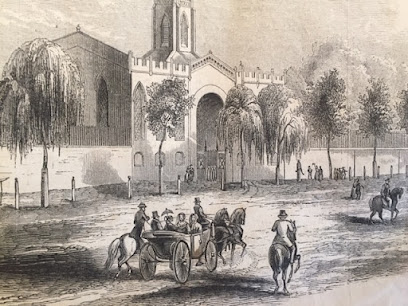
Above you see the Monument Cemetery gatehouse is it stood on North Broad Street in Philadelphia, in 1852 (Gleason’s Pictorial, Vol. III, No. 9, Aug. 28, 1852).


The comments people make (at both my in-person presentations as well as in Zoom virtuals) often provide me with missing details or ideas for further research. Examples include eye-witness accounts by people who were Temple students at the time the cemetery was razed, which certainly casts doubt upon the care which was supposedly exercised in the removal of the bodies.

When I advertise this presentation on Instagram or Facebook, I might get thirty comments, 95% of which will be in the “OMG-how-could-they-let-this-happen” category (which I expect), but there might be another 5% that will go something like this:

“…the graves were relocated, the headstones were used as backfill - no disrespect ...”

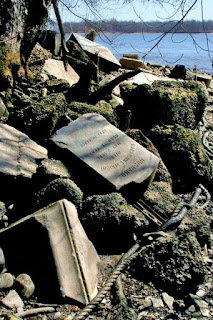
Gravestones along the Delaware
So yes, many of the gravestones were dumped into the Delaware River to help create a strong foundation for the Betsy Ross Bridge (which was then in the planning stage). Dozens of gravemarkers can still be seen at low tide under the bridge. There are differing points of view on this situation, and I am certainly open to everyone's opinion. We learn more about ourselves when we listen to others. Removal of cemeteries happened on a grand scale across the United States after the Industrial Revolution, as cities grew. Small church graveyards as well as large cemeteries often found themselves occupying land that was valued highly by developers. Probably the most disruptive example of this was in 1912 when San Francisco evicted all existing cemeteries - and those buried in them - from within the city limits. In 1929, it began moving the majority of its cemeteries to the town of Colma, California, just outside San Francisco. About 150,000 bodies were moved and many of the gravestones ended up in San Francisco Bay, where some can still be seen today. All in the name of progress.

Monument Cemetery was no different. It sat squarely in the way of the city’s expansion. Like San Francisco, Philadelphia’s population was growing, housing and factories needed to be built. And Monument Cemetery was not the only Philadelphia cemetery moved in that time period. While Monument held about 28,000 bodes, Lafayette Cemetery held about 47,000. Lafayette occupied the land where the present day Capitolo Playground sits in South Philly, next to the two famous cheese steak emporiums – Pat’s and Geno’s. The city paid a contractor to relocate the bodies, but wasn’t much concerned about their actual, eventual destination. But that's another story…

Vault being excavated from Monument Cemetery, Philadelphia, in 1956

And as you might guess (or maybe you might not), when cemeteries are moved, they never seem to move all the bodies. Which may be one reason Temple never went ahead with its plan to build a massive football field on the site previpously occupied by Monument Cemetery. You may have heard of the 2017 discovery of hundreds of bodies in a construction dig at Third and Arch Streets in Philadelphia, the site of the First Baptist Church of Philadelphia's burial ground. The bodies were supposedly relocated to Philadelphia’ Mount Moriah Cemetery in 1860. Well guess what - hundreds of bodies in wooden coffins were excavated from that construction site in 2017. Even when written accounts say that all the bodies were moved, well, all the bodies are never moved. Which is one reason they seldom build anything other than a ball field, playground, or parking lot over an old cemetery.


In conclusion, I try not to be critical. I just present the facts. We would all like to believe that we are, for the most part, good, honest, well-intentioned people. The actions described above were made by our ancestors, not us, right? 

Beware the Ideas of March! 

When I gave this presentation last year to an audience of about 175 attendees (hosted by the Athenaeum of Philadelphia), there was a comment in the Zoom chat – “We should raise money to have a commemorative bronze plaque made and attached to the original cemetery wall on the Temple University campus.” Yes, oddly, the cemetery’s stone border walls were kept in place! They are still there! What a fitting memory to this historic cemetery to have an historic marker or plaque placed on or near that wall.

Please join me at 6 p.m. on March 12! Here is the registration page for the presentation:


Further Reading:
My original three blog posts on the destruction of Monument Cemetery from my Cemetery Traveler blog:


If you want to read about the destruction of Lafayette Cemetery, please follow this link:


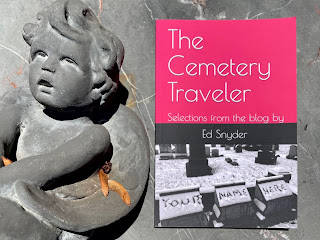
Also, my book, The Cemetery Traveler, which includes excerpts from these blogs, is available from Amazon:


Thursday, April 28, 2016

The Odd End to Philadelphia's Odd Fellows Cemetery

William Dick Elementary School, Philadelphia (former site of Odd Fellows Cemetery)
Coffin piece from Odd Fellows Cemetery?
A few weeks ago I received an email from a woman who was wondering about the resolution of this situation. In December of 2013, wooden coffins were surprisingly unearthed under a schoolyard in north Philadelphia. The Philadelphia Water Company was digging under the playground at the William Dick Elementary School (shown above) when caskets and other remains were found. When the story hit the news on Dec. 4 (see links at end), there was much media coverage. I went to the site to check it out. As far as I can tell, none of the graves that were excavated at that time were moved - seems like the Philadelphia Water Company just did their piping work and filled the ground back in. There were pieces of old pine board laying around in the mud of the site, one of which I picked up. Possibly part of an old pine box.

I lost track of the story and began wondering myself whatever became of this find. I see no further mention of it on the Internet. At the time of the incident, I missed an email from a reporter asking me to comment on the situation. Had I made the interview, I would have suggested he contact The Odd Fellows Cemetery Company in northeast Philadelphia for comment. The site in question (24th and Diamond Streets), was originally the site of Odd Fellows Cemetery, which had been established in 1848.

Latest occupant of the land once occupied by the Odd Fellows Cemetery

About a hundred years later, in 1951, the City of Philadelphia displaced Odd Fellows Cemetery and used the space to build a housing project and this public school. About 80,000 bodies were supposedly moved to Lawnview Cemetery in Rockledge (a Philadelphia suburb in Montgomery County), and Mount Peace Cemetery, at 3111 West Lehigh Avenue, Philadelphia. Both locations were, and are still, owned by the Odd Fellows Cemetery Company. The woman who wrote to me had a vested interest in the situation. It seems that many of her ancestors had originally been buried at Odd Fellows Cemetery.


Ironically, a few months prior to the unearthing of the coffins at Odd Fellows' original site, she had requested copies of her ancestors' burial records from the Odd Fellows Cemetery Company in Rockledge. Her ancestors had been buried there in the 1860s, 1870s, and 1880s. She received the records, which were stamped "Moved to Lawnview in 1951," complete with lot numbers of the graves. She had accepted all this as fact until the coffins were discovered. Now she's not so sure.

Plaque on monument in Odd Fellows Cemetery

When a cemetery or graveyard is moved, those in charge most likely try to move all the bodies. However, its fairly common that stragglers are left behind, and found years later by accident. But if stragglers are later found, should they not be relocated as well? The Philadelphia Water Company temporarily halted its work in December 2013 so archaeologists could examine the findings. As I was doing research for this article, I did see that an attempt was made by Philly.com to contact Odd Fellows Cemetery Company at the time of the schoolyard excavation. Calls were not returned.


Lawnview Cemetery field where tens of thousands of bodies were reburied

Why the name "Odd Fellows?"
"The Independent Order of Odd Fellows began in 18th Century England, it was deemed odd to find people organized for the purpose of giving aid to those in need without recognition and pursuing projects for the benefits of all mankind." - http://www.ioof.org/

Plaque at Odd Fellows Cemetery
Odd Fellows began as a fraternal organization in America in 1819, and continues to this day. Currently, the organization sees itself as a "...family of Odd Fellowship, composed of Men, Women, and Youth, believing in a supreme being, the creator and preserver of the universe, who have come together in our local communities having the same beliefs and values as others, that; Friendship, Love and Truth are the basic guidelines that we need to follow in our daily lives"(ref.). Friendship, Love and Truth are usually symbolized by the three chain links seen in the photo at left; sometimes the letters F-L-T are written within the links.


Sidewalk at 24th and Diamond Streets
The photo at right was taken in April 2016. It shows the new sidewalks at 24th and Diamond Streets which were poured after the opened graves had been filled back in, subsequent to the Philadelphia Water Company finishing its work. The fence encloses the playground of the William Dick Public School. There is no memorial plaque or anything to indicate that portions of the Odd Fellows Cemetery still exist under the playground.

Lawnview Cemetery, Rockledge, PA
Lawnview Cemetery has been the recipient of tens of thousands of relocated graves over the years, from other cemeteries besides Odd Fellows. The most notorious being the twenty thousand graves from Philadelphia's Monument Cemetery, which was razed in 1956. The rumor was that all these bodies were dumped into a mass grave. If you talk to the people at Lawnview, they tell you that they have a record showing the actual plot where each body was buried. No reason not to trust that, except that, as people found out in north Philly in 2013, not all the graves (from Odd Fellows) were actually moved.

If you drive through Lawnview Cemetery, there is a vast field with no grave markers. This is where the burials from Monument Cemetery and Odd Fellows Cemetery are. There are no monuments, headstones, or markers of any kind because most of them were dumped into the Delaware River (you can read about that here). Some markers from Odd Fellows Cemetery remained, albeit buried, at their original location. News reports say that marble headstones were found during the Philadelphia Water Company's excavation in 2013. If you drive through Lawnview, I will tell you that the sight is a bit unsettling. The field in question looks flat at first glance. But if you drive, the lateral view you get is a decidedly unflat grassy field. The peaks of the many trenches they must have dug to accommodate the tens of thousands of bodies are quite obvious.

Fields of Graves - Lawnview Cemetery, Rockledge, PA

I realize that I've posed more questions than answers in this blog post. If anyone can shed light on the topic, please post a comment here or email me at mourningarts@yahoo.com.


References and Further Reading:

Sunday, December 13, 2015

Union Cemetery Has Gone Missing ...

Here’s a short blog on an odd little situation I just discovered. I live in South Philadelphia near Third Street and Washington Avenue. At Sixth Street and Washington Avenue (running to Federal Street), there used to be a cemetery. It was called the Union Cemetery. The City of Philadelphia “removed” the cemetery around 1970 to further develop the commercial business corridor along Washington Avenue.

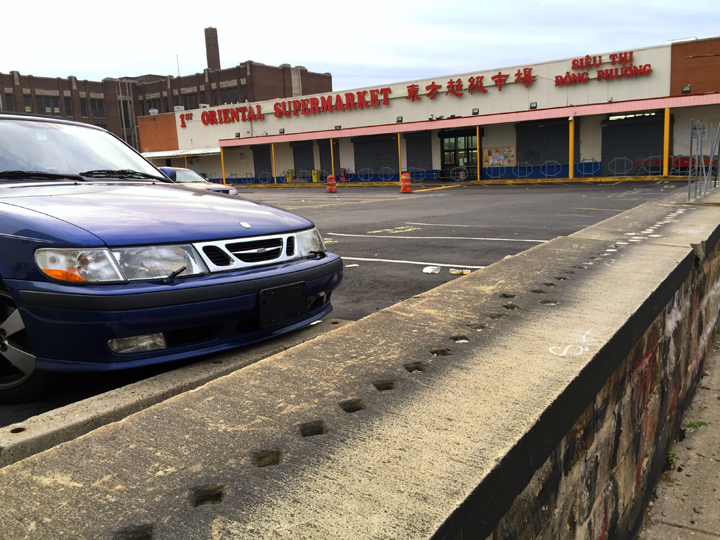
I have driven past the particular Asian supermarket you see in the photo above, which is at Sixth and Washington (Federal Street is behind it). I have driven past it hundreds of times since moving to the neighborhood in 2008. Until a few weeks ago, I had no idea that the stone wall along Sixth Street (on the south side of Washington) is the ACTUAL stone retaining wall of the Union Cemetery! Complete with holes in the granite top where the iron fence was anchored!

It is no wonder they would they destroy a cemetery to build a parking lot, but why KEEP the original retaining wall? If you’re expecting to find the answer here, you may as well stop reading – I don’t have it. There is quite a bit of information (and photos, as bizarre as that is!) on the cemetery’s demise all over the Internet, but I could not find out much about the wall. I suppose it will remain just one of those odd little cemetery facts.

Union Cemetery wall with fallen fencing, c. 1970 (Ref. 1)

I will quote a few of these sources and you can see more of the historic photos at the link to the Temple University Archives (at end). Temple, by the way, is no stranger to cemetery destruction. They conned the City of Philadelphia into condemning the city’s second Victorian cemetery in 1956 so the university could build a – you guessed it – a parking lot. (Read more about that on my blog post, "How Monument Cemetery Was Destroyed," at the link at the end.)

Picking through human bones during excavation of Union Cemetery, c. 1970 (Ref. 2)

Historic map of South Philadelphia's Union Cemetery (Ref. 4)
But back to the little ol’ Union Cemetery, the graveyard in the Southwark section of Philadelphia which occupied land about the size of half a city block. The name "Union," perhaps, may have sprung from the fact that a union, or association, of people established it in 1841. Ironically, 100 Civil War soldiers - mostly Union Army veterans, I suppose - were later buried here. Where are they now? Under the parking lot of the Asian supermarket? Supposedly not. Above you see a photo of a young man picking through the bones in 1970 so they could be reinterred, in a mass grave, I expect, in Frazer, PA – a distant suburb of Philadelphia . Get those dead as far away from the living as possible! Make way for progress!

Original entrance gate from Union Cemetery resides at Philadelphia Memorial Park in Frazer, PA. (Ref. 1)

From the Find A Grave website (Ref. 1):

"The Union Burial Ground was located at the NE corner of 6th and Washington; Federal Streets in South Philly, was incorporated in 1841 as an "association" cemetery, catered to the poorer residence who as association members could obtain a decent family plot for $10.00. This cemetery was called Sixth Street Union to differentiate it from another Union Burial Ground at 10th and Washington Avenue. In 1970 the cemetery which contained the graves of over 100 Civil War Soldiers and Sailors and their families was neglected and vandalized. That same year the site was sold for use as a supermarket. About 2,000 graves were dug up, the remains boxed and then reburied in Philadelphia Memorial Park in Frazer, Chester County."
Casual onlookers during the demise of Union Cemetery, c. 1970 (Ref. 3)
 

Union Cemetery's decline began at the end of the nineteenth century, as the area's residents began to move away, edged out by commercialization. With no close relatives living nearby to care for the graves, the cemetery went to ruin (Ref. 4). As I said, by 1970, it was gone - gone, that is, except for one of it's retaining walls. Perhaps it was left intentionally as a reminder to future generations - a reminder of the ground's sacred past, or perhaps our callous handling of the dead.