Showing posts with label Neil Gaiman. Show all posts

Tuesday, February 13, 2024

Toy Story … in an Abandoned Cemetery

This is my gratuitous Valentine’s Day post – you’ll just have to bear with me. Valentine’s Day is not the subject of the post, but apparently, there is some love involved. Tough love, maybe? You only hurt the ones you love? Again, bear with me (nyuk nyuk). If you’ve ever walked through a cemetery, you’ve probably seen stuffed toy animals on graves. Usually childrens’ graves. A common practice, leaving such an offering, a remembrance, perhaps. But in abandoned cemeteries? 

Abandoned cemeteries are a form of dystopia, to be sure. The environment – meaning nature – is usually in the process of destroying what humans built. For the past twenty years a Victorian-era cemetery in Philadelphia has been in a sad state of disrepair, only accessible to those who the owner or caretaker allows in. Many wonder how it got this way, but the real question on everyone’s mind is:

Why are there so many toy stuffed animals lying about throughout Mount Vernon Cemetery? 

There are no visitors to place them on graves in loving memory of the deceased. There are no visitors. There is no visitor access. You can almost picture some hideous beast living in its burrow, periodically feasting on stuffed animals. The ones you see here, matted down with weeds and rain, well, don’t really belong here, do they? The trapped, partially dismembered clown fish above has a look of fear in its eye. 
Stuffed Animal Dystopia.

Its almost as if some beast killed them with its poisonous saliva and secreted a fluid to trap them in weeds until it later required a snack. Much like an insect that gets caught in a spider’s web. Perhaps this is simply attribution bias on my part. Perhaps not. One poor toy was in the process of being dragged into the beast’s lair as I stumbled upon the massacre scene. You can just hear Jennifer Lawrence singing, “The Hanging Tree,” right?

Into the lair of the beast ....

Do the toys get thrown over the fence by the caretakers of the active cemetery next door, as they clear graves prior to mowing? Then something, or some things, retrieve the toys and drag them through the fence into the abandoned graveyard. The mind wanders to Neil Gaiman’s The Graveyard Book ..and the toys Bod may have left lying around the cemetery in his formative years.

A fox, perhaps, requires such playthings? That, apparently, is the general thought if you read the Instagram posts by the volunteers now caring for the cemetery.

So, first off, Mount Vernon Cemetery in Philadelphia is no longer abandoned. Technically, it never was. It was simply ignored by its owner - for about twenty years. It is currently being maintained by many dedicated volunteers. There are regularly scheduled cleanup days and occasional tours, but access is closely controlled. Here’s a photo of my friend Kim posing with some bears during a recent tour.

Mount Peace Cemetery, next door, has always been well-cared for. It seems likely that somehow, these small grave decorations travel from there into unkempt Mount Vernon next door. Perhaps the wild foxes that prowl the wooded grounds of Mount Vernon steal these objects from Mount Peace in the night - they snitch Winnie-the-Pooh from a defenseless grave, and abscond through some hole in the cyclone fence into the wild next door. But to what end?

Mount Vernon’s twenty-seven acres is probably twenty percent cut back at this point, with nature having a twenty-year lead on the humans trying to tame the bush. So there are plenty of hiding places for fox, deer, and so on. I’ve seen small herds of white-tails leaping through the underbrush. Sometimes you’ll even see shredded toys, along with …. bones?

So, do the red foxes drag the stuffed critters into their burrows for padding? Groundhogs do this – but with them, its usually the flags from the little flagpoles people stick on graves. But then, why are they scattered all over the grounds? That’s like saying if humans are descended from apes, then why are there still apes?

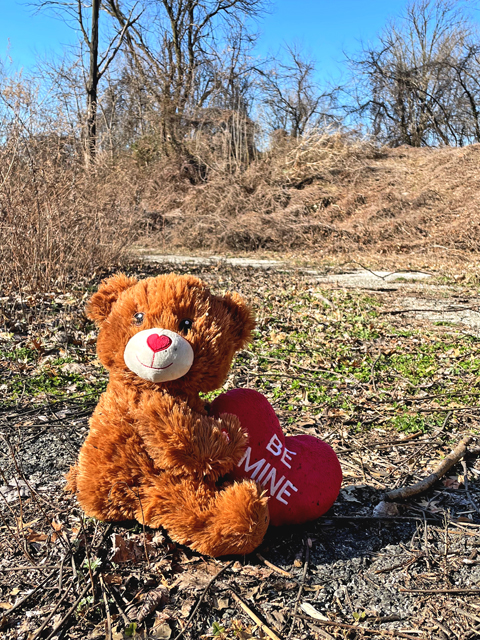
What I don’t know about the housekeeping habits of small woodland creatures could fill volumes. Perhaps instead, UFOs are involved. Whatever the case may be, if you find yourself walking through a more-or-less abandoned cemetery alone and you round a bend to find this Ted smiling at you in the middle of the road, your brain does not race for a logical explanation. Your brain screams.


Sunday, September 11, 2016

So when you die ...


So when you die, will you waft gently to immortal life, or will it be like moving to a new house or apartment? I would assume the latter, and specifically, to an apartment. It takes you a few weeks to get used to the new layout (and months to get used to the new fridge). The door lock keys don’t work properly, of course, but who would you call to report that anyway? Nothing is where you think it should be. It’s like driving an American-made car all your life and then you rent a Subaru – all the same stuff is there, just in slightly wrong places.

I’m sure its disorienting to wake up dead. One moment you’re say, having sex, the next moment you’re dead (this actually happened to someone I know). Are you out of body watching the scene or does everything just go dark? And then, as Woody Allen said, “when you’re dead, it’s hard to find the light switch.

 +++++++++++++++++++

When you come to, do you know where you are? Are there signs? Writer Neil Gaiman wrote  (in his book, Coraline): "It is astonishing just how much of what we are can be tied to the beds we wake up in in the morning, and it is astonishing how fragile that can be."

I hope Neil continues writing cool stuff in his afterlife. Its awesome to think that only the dead will benefit from his genius from that time forward. Maybe that would be Heaven for his readers? I used to think that the only difference between Heaven and Hell is the type of music they play. Now, after recently moving from a house to an apartment, I think there may be more to it than that.

Wherever you land, you have no idea who your neighbors are. You say, “Hi. Just moved in.” You shake hands. I wonder if its politically correct to ask, “How long have you lived here?” Does time exist after you die? Is there night and day? Seasons? ATM machines? You can’t just Google this stuff anymore. Where do you get your hair cut now? I'm writing this mainly from a guy's perspective, but I realize the hair issue is much more complex for women. For all of you women out there, where will you get your hair colored, foiled, double-processed, or even just blown out? After life's fitful fever, she many not, actually, sleep so well.


Relative to your prior corporal address, trash collection is on a different day of the week - assuming there is such a thing as trash (and days, for that matter). Do we consume things in the afterlife? And what about grocery stores and a good auto mechanic? It’s always tough to start over with these things in a new locale. One thing is for certain, however - if there is a God, there will be no dentists in the afterlife. To my mind, this is the single greatest advantage to being dead – no more dealing with your teeth.

 +++++++++++++++++++

But once you get used to your new environs, many things fall into place. Some that do not fall into place are the coins from your pocket when you get into your car. There is no longer a need for money after you die, although you will indeed have a car. In Heaven, you may once again have your long-lost favorite, perhaps that green ’67 Mustang 289 with the rust around the quarter-panels. The rust will still be there, unfortunately. The afterlife is not a miracle-cure, people. In Hell, you’ll drive a Yugo.

Why are all the electrical sockets in your new digs so loose that the plugs just want to fall out? Tough to properly adjust this weird cranky tub faucet to get the right temperature water in the tub – man, you think they would have at least cleaned that after the last people left. And where did they go…? Maybe this is Purgatory, or Limbo? No, wait, the Catholic Church did away with them, right? Was that like a marriage “annulment,” where the Church doesn’t actually cancel something, they just say that it never existed in the first place? I wonder if I can put in a request to have certain people annulled.

So if this is Purgatory, the congested parking situation is only temporary. If I go to through the hassle of acquiring a residential parking permit (good for a year), I might be moved to the next place tomorrow!


And who do you call to order a pizza? HOW do you call? Dying idiot that you are, you forgot to bring the cord to charge your iPhone. Where could you buy a new one? Can’t just go down to the lobby or the gift shop. Or can you? After a couple months, you’re used to your surroundings and it just becomes your normal mode of existence. It’s the opposite of economist Adam Smith’s free market adage, “adapt or die” – here, you just die and adapt. See you there - I'll save you a parking space!

Thursday, May 16, 2013

Sleeping, Resting, Waiting ...

We see these words on tombstones and cemetery monuments all the time. If you’re like me, you think its just a way to soften the blow of death for those left behind. The child is dead, for instance, but to make us feel better, we think of it as the long sleep. The implication of course is that (if you’re a Christian) you’ll be together once again in heaven. Seems to go hand-in-hand with Victorian sensibilities relating to death and the mourning arts. However, the idea of death as "sleep" has much older origins.

"Koimeterion" is the ancient Greek word for "sleeping room." The verb "koiman" means "to sleep." A cemetery, then, originally may have been thought of as "sleeping quarters," temporary lodging. This “temporary sleep” is put into perspective by Mark C. Taylor in his book Grave Matters: (2004) "In the Early Christian tradition, which has been so important in shaping the space and determining the significance of cemeteries and graves in the West, the cemetery was seen as a temporary resting place where the dead awaited resurrection.

So what’s wrong with thinking we’ll all see our loved ones in heaven after we die? Seems kind of innocuous, right? Makes us feel better when we lose someone. What’s wrong with this picture hadn’t occurred to me until very recently. In the book, Good Omens (by Neil Gaiman and Terry Pratchett, 1990), the twelve-year-old antichrist gone good, states the following: “If you stopped tellin’ people its all sorted out after they’re dead, they might try sorting it all out while they’re alive.

So telling us Christian sheep to roll over and die, because things will be better in heaven, is like saying, “you have no control over this, so just accept it.” How can such passivity change the world for the better? Doesn’t that fly in the face of what Christianity is all about – love your neighbor as yourself? Isn’t that a mixed message (even a bit hypocritical)? If we really loved our neighbors as ourselves, we would try to work out our differences while we’re alive, not just let the differences continue hurting us. Saying someone will “burn in Hell for what he did” is the same thing. It might make us feel better to think that they'll get what’s coming to them after they die, if it seems like they can't be punished sufficiently for their deeds while still alive. 

So, after reading all this, everyone out there who feels we’ll get our “just rewards” after we die, raise your hand. Wake up people. A more practical epitaph is seen on the headstone below: "She hath done what she could." The phrase may seem trite at first glance, but really, maybe she really did do all that she could to make this world a better place. Shouldn't we be following in those footsteps?


Final Notes:
The first and last photos were taken at Philadelphia's Mount Moriah Cemetery. The "Resting" and "Waiting" stones were photographed in Wilmington, Delaware's Wilmington and Brandywine Cemetery.

Tuesday, May 7, 2013

Cemetery Traveler Celebrates 3rd Anniversary!


I find myself this month on the precipice of a fourth year writing the Cemetery Traveler blog. Yes, its been three solid years of my dark tourism adventures. By my count, 132 articles have been published since I began in May of 2010. Have I run out of things to say? No, but my laptop gave up the ghost last week. Had to go out and get a new one. All that lives is born to die, sigh (except sourdough yeast, I suppose). Hopefully, I won’t upset this one as much as I abuse it verbally while I am forced to learn Windows 8.

I have over 100 followers now, a fact that humbles me and of which I am deeply honored. Thank you all for reading and I dare say, you are now prepared for your next step in the indoctrination.

At the beginning of April, 2013, I had an exhibit of my work in Philadelphia that I called “Symptoms of Cemetery Photography" (click link to go to that blog posting). I meant it as a nod toward the way cemetery photography has influenced my art and techniques in the photographic medium. That in itself is a later blog. For now, I just want to acknowledge how making cemetery photography has opened up tangential doors for me. I also want to acknowledge the people who have made these opportunities possible for me.

So, here are a few highlights from last season, places I’ve gone both literally and figuratively, through The Cemetery Traveler – symptoms, as it were, of my cemetery photography:

•Grandma's New Headstone

I wrote a blog “My Grandmother’s Grave,” in June of 2012 about how my grandmother (who died in 1964 when I was six) never had a headstone on her grave. I felt pretty strongly that she should have one to mark her history for future generations. We should all have some anchor to the past, as became evident to me last year when so many people contacted me about the headstones dumped under the Betsy Ross Bridge in Philadelphia (see "Resting in Pieces Along the Delaware River"). My Mom and I got together and she had a stone made for Anna Jones, her mother. It was placed on her grave this past fall.

•The Friends of Mount Moriah Cemetery

Ed (L) with "Find-a-Grave" administrator, Russ Dodge (photo by A. Selletti)
After my years of adventures at the (formerly abandoned) Mount Moriah Cemetery in West Philadelphia, I was I’ve evolved from an awed bystander to an involved conservator. This past year I applied for a position on the Board of Directors of The Friends of Mount Moriah Cemetery (a nonprofit organization). I was voted in as the Communications and Technology Committee Chair. I’m glad I can put my writing and photographic skills to good use, honoring the memory of those interred in the cemetery through restoration, historic research, education and community engagement. I’ve been writing and posting photographs about the cleanup events on the Friends’ website, which you can see here (an odd sub-specialty of “event photography” which you don’t normally think about!).

•Publications

Book cover – I had given permission to the British Centre for Freudian Analysis and Research organization to use one of my photographs for the cover of its February 2013 Journal (JCFAR)  issue “On Love.” Cupid and Psyche never looked so fine!

•Imaging Technology

Diana (top) and Holga cameras
This past year, my DSLR forgot how to autofocus, so I had to replace it. This was a mere week after I made the momentous decision to plunk down $400 on a high quality digital point-and-shoot camera (or, as I call these little miracles in my book, Digital Photography for the Impatient, DPS cameras). That was a load of money, but the Canon G9 DPS and the Canon XTi DSLR are working out just fine. Oh, and I bought another Holga at the Philly Punk Rock Flea Market around Xmas time for six dollars (!), so I plan to do more lo-fi work with that. Speaking of new gear, we bought our three-and-a-half-year-old daughter Olivia an iPad, since all her nannies have had one. She’d been clamoring for her own and we didn’t want her to get too far behind the technology curve. I plan to take cemetery photos with it.

•Genealogy

B'nai Israel/Hebrew Mutual Burial Ground in West Philadelphia
Genealogy never was my strong suit (it still isn’t), but I’ve gotten myself involved in a few related situations which I wrote about last year. After posting a blog about the (formerly abandoned) B’nai Israel Cemetery in West Philadelphia (see "Abandoned Jewish Cemeteries"), I was contacted by a descendant who asked for help photographing the inscriptions on the stones so he could enter the information onto the JewishGen Worldwide Burial Registry (JOWBR), so I did this. There were about a hundred headstones.

Monument cemetery stone
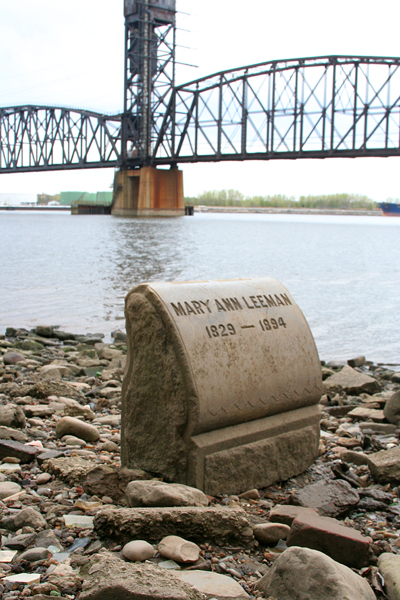
Recently, a graduate History student asked me if she could use my photos and information about Philadelphia’s defunct Monument Cemetery in a presentation on the effect of urban renewal on rural cemeteries in Philadelphia, using Monument Cemetery as one case study. This Victorian cemetery was condemned by the City of Philadelphia in 1956 and the tombstones and monuments were all dumped into the Delaware River. So many people responded to my two 2011 blog postings (see "How Monument Cemetery was Destroyed") about this atrocity that I decided to make a third visit (read about this in "Beachcombing in Hell") in 2012 to document as many names and dates from the discarded headstones as I could. In addition to writing about this visit back to the Delaware Riverfront under the Betsey Ross Bridge, I subsequently uploaded twenty-five separate names, with photos of the headstones, to the Find-a-Grave website.

Finding lost graves
I’d like to add that my postings about Monument Cemetery have generated considerable public interest and media coverage, which will hopefully result in a more respectful final resting place for these stones. As I said in my blog at the end of April, 2013, "Finding Lost Graves", people need a tangible link to their past. These discarded memorial stones may be the only tie some of the descendants have to their ancestors.

The aforementioned experiences are after the fact, retrospective studies. Finding graves in the here and now is a new experience for me, and one which I wrote about in the aforementioned blog, “Finding Lost Graves.” I have been afforded this opportunity through my involvement with the Friends of Mount Moriah Cemetery, and I must say that it is a truly rewarding experience.

In Summary


So, these are just a few things I’ve covered this past year in the Cemetery Traveler blog. If you missed any postings, I invite you to go back into the archives and look them up (you can type in a keyword or phrase in the “Search” box at the top left corner of the page).


 “The world is a lot more complicated than most people believe,” wrote Neil Gaiman and Terry Pratchett in their novel, Good Omens (1990). Cemetery photography, for me, has been a good omen, which has resulted in a variety of complications, or symptoms, about some of which you have just read. (By the way, since I had to create a password for my new laptop, I incorporated the words “Good Omen” into it.)

What, There’s More?

Yes. I intend to continue to draw aside the veil and explore the mysteries of dark tourism for as long as I possibly can. I’ll continue to ask the hard questions and point out the ironies in our attitudes toward death and mourning, calling it the way I see it. Occasionally this gets me into hot water with the irascible types, but the investigative reporter side of me steps in and tries to point out both sides of the argument (if there are any). 

Happy to say that my three-and-a-half-year-old daughter Olivia seems to be following in my footsteps. I took her gallery-hopping this past First Friday in Philadelphia and as we walked into a particular moodily-lit place, she spoke her mind. The gallery was showing photographic “scenes from the Chelsea Hotel” (in New York) and a sign outside said they were going to be showing Warhol’s movie “Chelsea Girls.” The gallery was crowded with serious-minded bohemian-looking mods, talking art as only artists of that type can. As we walked into their midst, Olivia said in a loud voice, “Do they have snacks?” Man, did THAT cut through the affectation!

    --------------------------------------------------------------------------

Purchase Ed's book, Digital Photography for the Impatient, from Amazon.com.