Showing posts with label digital photography. Show all posts

Monday, June 27, 2016

PPAC 2016 MEMBERS EXHIBITION

JULY 1 – 29, 2016 @ SAVERY GALLERY
ARTIST RECEPTION / July 7, 2016 / 6-8pm
319 N. 11th Street
Philadelphia, PA 19107

Above you see my entry in the annual “Members Exhibition” of the Philadelphia Photo Arts Center (PPAC). It is a first for me (no, I’ve been photographing cemeteries since the late 1990s, smart aleck) – my first publicly hung smartphone image. Seems a bit like cheating, that I didn’t make this image with some super-expensive, high-quality camera. I made it with an iPhone6, which I’ve only owned for six months. Perhaps it is time to stop telling people that I make all my serious photographs with film cameras!

I felt a bit guilty as I delivered the 12-inch square print (made on watercolor paper), archivally matted and framed in a 20-inch silver metal frame, to the exhibition’s curator. As I saw a dozen other people’s work waiting to be hung, I chatted with her about the fact that mine was made with a camera phone. She said she was fascinated by it on the submission site and was looking forward to seeing it in person. We chatted about the improvements in digital imaging technology, but I had to admit to her the main reason I made this image with my camera phone – I wasn’t about to climb over a wall into a graveyard at sunrise toting my Mamiya 645!

So yes, I did exactly that. Climbed a wall and a fence in the wee hours of the morning, into the closed Woodlawn Cemetery in Tampa, Florida. This was at the beginning of June, 2016. I was in town for a conference and was heading back to the airport that morning. Got up extra early and took Uber to the cemetery. I had never been here, and explored the grounds for over an hour – the hour just after sunrise. Imagine my surprise when I found this Victorian lady perched on her marble chair above her own crypt! The rising sun at her back haloed the outline of her statue in a breathtaking manner. The scene screamed, "Monochrome!"

At eight a.m., I called Uber to get a ride to the airport. About ten minutes later a woman of Spanish descent arrived in a late-model black Mercedes. She tentatively rolled down the passenger window as I said hello. As I opened the door, she laughed nervously and said, “I never picked up at a cemetery before. When I got the call, I thought, ‘Even THEY use Uber!'”

So come see my photograph in person, as well as dozens of others by talented photographers who are PPAC members. There is an opening reception, free and open to the public. I’ve reproduced below their announcement of the show from the PPAC website. I particularly like the last line: “As always, this survey of regional photographers will welcome a diverse array of photographic themes and subject matter.” I’m sure every photograph in the exhibit has a story behind it like mine. Come meet the artists and ask them!

JULY 1 – 29, 2016 @ SAVERY GALLERY
ARTIST RECEPTION / July 7, 2016 / 6-8pm
319 N. 11th Street
Philadelphia, PA 19107

Balancing a huge pool of talent with close-knit camaraderie, Greater Philadelphia is a welcoming home for any artist. As members of the Philadelphia Photo Arts Center will tell you, it’s an even better place to be a photographer. To celebrate the talent within our community, PPAC will host our annual Members Exhibition from July 1 to 29, 2016 at SAVERY Gallery. The Member Show opening reception will be held on Thursday, July 7th from 6-8pm. As always, this survey of regional photographers will welcome a diverse array of photographic themes and subject matter.

Friday, January 30, 2015

Wildlife Photography in the Cemetery

I’ve never thought of myself as much of a "wildlife" photographer, since I’m more likely to make photographs like the one below than the one you see of these deer above. However, I did in fact make both photographs. The thing I don’t like about wildlife photography is the hunt. Sure, you can photograph animals in a zoo or a game preserve, but that’s a lot different than shooting in the wild. Since I have the attention span of a gnat and the patience of a Great White, my wildlife photos have all been sheer luck. Well, the sightings themselves sheer luck – the capturing of animals in a photograph takes a bit of skill.
 
So where do I shoot, er, that is, photograph wildlife? Where to find wild animals? In cemeteries! This is more convenient for me than going to the mountains since I live in a large city (Philadelphia) and there are scores of cemeteries in the area. While I’ve seen my share of wildlife in maintained, crisply clean cemeteries (like this fox shown below at Holy Cross Cemetery in Yeadon, PA), it’s the overgrown graveyards (and the ones with patches of woods) that offer more photographic opportunities. Why? Simply because they offer more cover to animals such as deer, fox, hawks, etc. The animals live there - the cemetery is their habitat.

Fox on the run!

Now, my hero of cemetery wildlife photography is my friend Frank Rausch, who works (and yes, lives in!) Historic Laurel Hill Cemetery in Philadelphia. Frank is an accomplished photographer and makes good use of the opportunities at hand. In his off hours, he has been able to make some magnificent photographs, not only of the monuments and headstones, but of the animals that live around (and sometimes under) them! I like to tell people that I’m lucky to catch a blurry squirrel or a little bird on a headstone, but Frank goes for big game. My images pale in comparison!

Hawk, Laurel Hill Cemetery, Philadelphia (photo by Frank Rausch)
I’ve even gone so far as to jest with people by saying that Frank carries a stuffed hawk around in the back of his truck so he can perch it in the most unusual place just so he can photograph it! Sadly, that is untrue -  Frank is just a better wildlife photographer than I am. The photos directly above and below are examples of his fine work. (Foxes, you'll notice, don't run away from Frank like they do from me!)

Baby red fox, Laurel Hill Cemetery, Philadelphia (Photo by Frank Rausch)

So I decided to ask Frank for advice. But before I even received his reply, I wanted to point out a few things I’ve learned on my own over the years. It should be interesting to see what I may have missed! You can compare the opinions (and the quality of the images) of both an amateur (me) and an accomplished (Frank Rausch) wildlife photographer.

Hawk in Mount Moriah Cemetery, Philadelphia/Yeadon, PA

Ed Snyder’s Wildlife Photography Tips:
  1. Go where the creatures are.
  2. Have your camera (s) ready at all times.
  3. Scan your surroundings for critters while you’re photographing that tombstone.
  4. Consider video (if you're on Facebook, you can link to this video I made) to supplement your stills.
  5. Practice focusing through trees (if there are trees or bushware between you and your furry subject, this will wreak havoc with your autofocus system!)
  6. Be as familiar as possible with the habits of certain animals (e.g. foxes live in burrows, deer do not, that sort of thing).
Okay, that second one is easy to say, have your camera ready, but it implies that you also know how to use it properly and you know how to adjust for poor lighting conditions, rapid movement, and focusing challenges. Wild animals will present you with all these, and sometimes all at the same time! Take a look at the photo above of the hawk in flight. I saw this guy fly into a tree and made a few photos of him sitting on a branch. As he became fidgety, I figured he would take off - but in what direction? I caught him as he left his perch, but this was shear luck. A good habit to develop in such a situation is to not zoom in too closely on your subject! Shoot a bit more of the scene than you want in order to give the animal some space in your image frame. If you're lucky enough the catch the action, you can always crop the image later (like I did with the hawk).

Ten-point buck in Mount Moriah Cemetery, Philadelphia

Here's an example of the last item in my list - be familiar with the habits of certain animals. I was recently at Mount Moriah Cemetery in Philadelphia, a formerly abandoned cemetery whose hundreds of acres are still about seventy-five percent either wooded or overgrown. My friend Bob Reinhardt and I were pushing our way through the waist-high dried weeds (this was December) in an area of the cemetery we had not explored recently. We were walking uphill along a deer run, and there were many fresh tracks and deer droppings all over. While Bob was photographing an inscription on a headstone in the weeds in front of me, I looked up past him and saw a ten-point buck standing about twenty feet away staring at us, probably wondering just what the heck we were doing in his garden! I whispered to Bob to slowly stand up and look at the deer ahead of him. I slowly raised my camera and grabbed a few shots (one you see directly above) before if slowly disappeared into the thicket.

A couple weeks later, when I was by myself at Mount Moriah photographing during a light snowfall, an enormous doe jumped across the road in front of me. I never saw her coming, so I totally missed the photo. This will happen to you. A lot. What plays on your mind when you’re in a cemetery is that you expect everything to be stock-still. I could say that cemeteries are good places to do still-life photography but that would be a cheap shot!


Turkey vulture on statue (photo by Frank Rausch)
Now here's a wonderful image made by Frank Rausch where, I'm guessing, he exhibited a great deal of patience. There are stories behind every photograph, and Frank has them. He no doubt lied in wait for this turkey vulture to spread its wings for this majestic pose! I know for a fact that Frank does not digitally alter his images, so none of his work is manipulated in that fashion. He never even crops! So, without further ado, let's see what tips he has to offer. 

Frank Rausch’s Wildlife Photography Tips:
  1. Stay observant. View your surroundings for any natural habitat.
  2. Stop every so often. Look and listen.
  3. Carry at least one Tele-zoom, preferably with at least 200-300mm focal length or longer because your shots might be from a distance.
  4. Carry a tripod for stability if necessary and for low light shots.
  5. Polarizer filters are helpful for sun glare.
  6. If you should spot an animal going into a den make note of the location and if possible return at different times of the day for activity.
  7. Research your favorite animals to photograph. Familiarize yourself with their breeding, living and possible migratory habits so you can be at the right place at the right time.
  8. When focusing remember the eyes tell the story.
  9. A wide aperture will shorten your depth of field and accentuate your subject.
  10. Be patient. I've waited near a fox den for hours to get the shot I wanted.
  11. Manual focus may sometimes be necessary if obstructions like branches are between you and your subject.
Once you get that first GREAT shot you'll be hooked forever. HAVE FUN!!


Cemetery Hawk  (photo by Frank Rausch)
Frank’s Tip Number 8 tip is wonderful -“When focusing remember the eyes tell the story!” Just look at the eyes in his animal photographs! I’m aware of the advantages of doing this when photographing people - to always have the eyes in focus, but I never thought about applying this to our furry friends. One of the things Frank does not mention is that his photography gear is much more sophisticated than mine (but not extravagant). He uses Nikon D90 and D800 bodies, with a Nikkor 70-300mm zoom, 18-105mm zoom, and a Tamron 200-500mm zoom.  

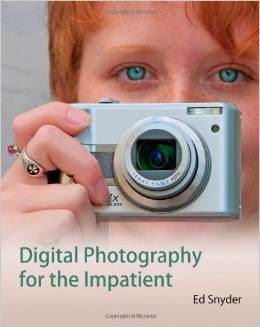
My photo gear is not that sophisticated, but I still manage to get decent wildlife photos now and again. (The ones in this article not attributed to Frank Rausch are mine.) I shoot with a Canon G11 (a “DPS,” Digital Point and Shoot camera, as I call them in my book, Digital Photography for the Impatient) and a Canon Rebel XTs with a Canon 28-135mm F3.5 zoom. Regardless of the gear you use, wildlife is out there to be photographed! Try it and have fun!


See more of Frank Rausch's images on his website: