If you’re at all into the mourning arts, you owe it to yourself to visit a shop in New Hope, Pennsylvania, called
TearDrop Memories. The proprietor, Greg, is well-versed on the subject and can be wildly entertaining and informative. If you’re also into antique bird cages, he has them as well. I’ve never asked him about the connection – I’m sure there is one.
I just made my second visit to
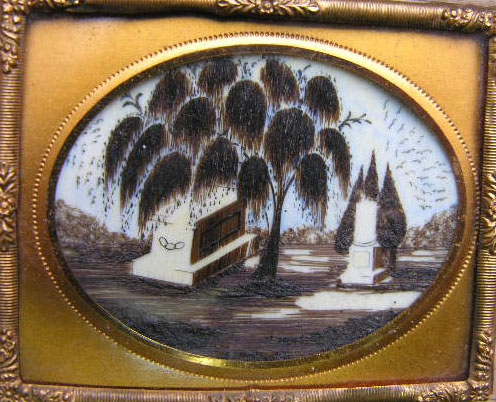
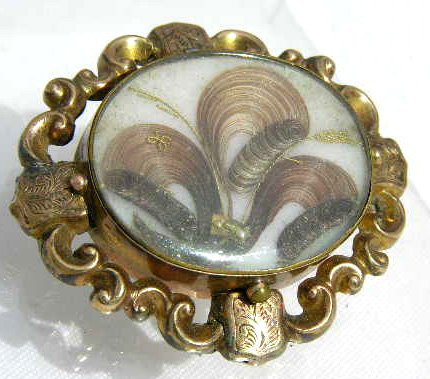
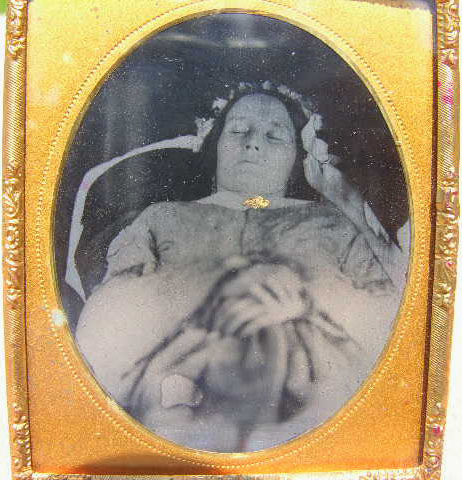
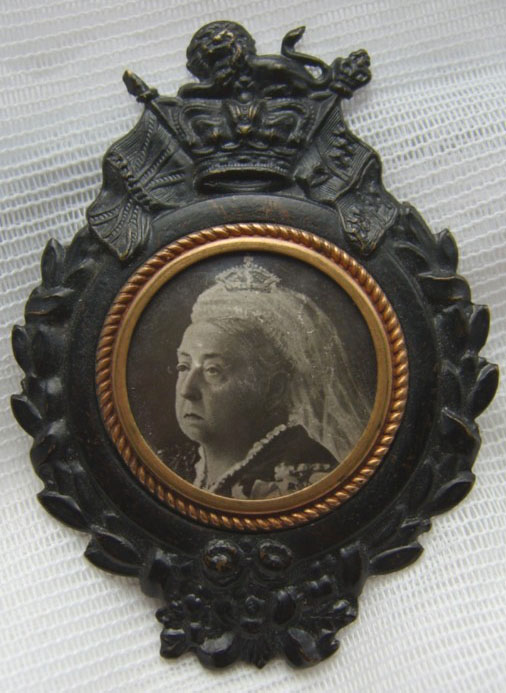
TearDrop Memories in six months. I suppose it will be a routine stop for me from now on when I visit New Hope or Lambertville (in Jersey, just across the river). Greg’s shop is unparalleled as to the extent of his collection, all but one item of which is for sale (you can ask him what that singular item is!). He has an inventory of thousands, large and small. Yes there are coffins and Victorian mourning attire, but there are also death masks and fine examples of Victorian mourning jewelry. (All the close-up images of mourning art pieces in this article are from
TearDrop Memories' website.)
If you’re unfamiliar with mourning arts items, there’s a good book called
Mourning Art and Jewelry (2004), by Maureen DeLorme. According to the author, decorative art to commemorate and memorialize the dead reached its zenith in beauty and popularity in the Victorian era. When the husband of Britain’s Queen Victoria, Prince Albert, died in 1861, Victoria went into a period of mourning that was unheard of up to that time. She eventually emerged from her overwhelming grief, and although she resumed her official duties, she dressed in black crepe for the remainder of her life. An entire industry of mourning arts grew out of this.
DeLorme explains: “
Life spans were short … with the average age of Victorians at death being forty to forty-five.” Due to prevalent wars and the filth and grime of cities in the throes of the Industrial Revolution, people frequently did not live past the age of seventeen. Out of respect for the dead and a desire to preserve their memory, things like hair jewelry and mourning clothing were invented. DeLorme states:
“Thus the pressures of continually facing death as an intrusion into everyday family life made the need to keep both the presence of the “Lost Beloved” near while simultaneously bidding farewell, a preoccupation. Victorians met this need by creating an extensive mourning culture employing elaborate mourning dress, jewelry, and funeral trappings; memorial portraits (both drawn and painted); postmortem photographs; sculptures, busts, and death masks; and a myriad of commemorative artifacts.”
And by no means was this mourning culture isolated to Britain - mourning arts spread across the United States as well. You can see hundreds of full-color examples of these memorial items, with their histories, in DeLorme's book. You can also see most of them in person at
TearDrop Memories. I’ve included in this article some photos I took in the shop, and you can see more on Greg’s
website. Honestly, until you see such objects up close or hold them in your hand, you cannot fully appreciate their intense human connection.
TearDrop Memories is located at 12 West Mechanic Street in New Hope (
click for map), a block up the hill from New Hope’s storied Main Street (two blocks south of the bridge over to Lambertville). If you’ve never been to New Hope, you’re in for a surprise. This little town has a most intense tourist trade! Custom automobiles cruise the main street on sunny Sunday afternoons, while packs of deafening Harleys rumble by. In a four-block length of road, its not unusual to find fifty motorcycles parked. Leathers and feathers co-exist among the shops as well as on the shoppers themselves. Leaving the tourist traps one can veer up Mechanic Street past the quiet coffee shops and restaurants to number twelve, a storefront that welcomes you with an antique birdcage and an arrow inviting you down the steps to the back of the building, where
TearDrop Memories is located. Goth girls, couples, and Victorian enthusiasts alike amble in to the small shop at a regular rate.
 |
| Greg Cristiano of TearDrop Memories |
Outside on his patio, Greg stands a bird cage on a pole with a child’s white coffin propped against it. A curious juxtaposition for Main Street tourists to see. Once lured in,
TearDrop Memories can certainly give you the willies. However, the one thing you can never fear is the act of asking questions. Greg, the owner, is most engaging, entertaining, and I might add, extremely well-schooled on his subject. He has been in this business since about 1996. He supplies both private collectors as well as cemeteries and museums with authentic mourning arts items.
 |
| Photo from TearDrop Memories' website |
What can you find at TearDrop Memories?
 |
| One of many displays at TearDrop Memories |
Probably many things you never knew existed, like antique embalming pumps, mourning jewelry, wall hangings, clothing, memorial plates and other ceramics, coffin handles, coffin name plates, oh yes, coffins themselves. There are books, creepy dolls, death masks, post-mortem photographs, antique funeral parlor signs from when undertakers also built furniture. Many of the wall hangings and many of the brooches, pins, and rings incorporate the woven hair of the deceased (think weeping willow trees made of human hair). All in all,
TearDrop Memories is a fabulous history lesson in our seldom discussed past.
 |
| Image from TearDrop Memories' website |
On my most recent visit, I asked Greg to show me the weirdest thing in his shop. I won’t tell you what it was, but I’m guessing if you asked him on a different day, he’d pull something even more shocking out from under the counter! This place is not for the faint of heart. On one of the walls hangs an 8 by 10 inch lithographic remembrance of a child’s death (maybe from the late 1800s) – with four small coffin handles surrounding a little broken white porcelain angel. I commented “
Why would you want something that grotesque hanging in your home reminding you of your child’s death?” Greg very astutely pointed out that it was one of the few things the family had to remind them of their
child, not simply its death. He added, “
Photography was invented in 1840, but it really wasn’t until after the 1910s that people could actually afford to have their picture taken. Up until then most people only had their photograph taken once in their lifetime. So they wanted SOME tangible memory of the child.
As a photographer, I obviously have a soft spot in my heart for photographs and photography. I never thought about how precious a photograph could be, or used to be. Back in the Victorian era (1837 – 1901), it was a major life event to have your photograph taken. So after a child’s death, a remembrance of some sort was needed. I’m sure that if the cost of a photograph was great, the cost of a commissioned oil painting must have been out of most people’s reach. That said, people who had the money at the time of their child’s death would sometimes have a post-mortem photograph made of the child. Such photos might show the child in a coffin or dressed up and sitting up in a chair. Sometimes open eyes were painted on the closed eyelids, so as to appear alive, the way the family wanted to remember the child.
TearDrop Memories has photographs of this sort for sale.
The items in Greg’s store (and on his various websites, listed below) are not inexpensive. Even (at the time) throwaway Queen Victoria commemorative death pins can cost forty dollars. But you must remember that most of Greg’s inventory is unique, like the human beings they were designed to memorialize. So if you need an antique wicker casket or old marble headstones, this is the place to get them. Unlike the epitaphs carved on grave markers, Greg’s hours are not set in stone. It’s best to call him (215-862-3401) and leave a message regarding the day you’re planning to come by. He’ll phone you back and most likely have the door open for you whenever you’d like to stop in.
References and Further Information:
TearDrop Memories Antiques website
TearDrop Memories photos on
Yelp site
Visit
TearDrop Memories' web shops for great antique treasures:
http://www.TearDropMemories.com
http://www.NorthForkPets.com
http://www.MaidensMemoirs.com
http://www.WeSpeakAntique.com
TearDrop Memories Antiques
12 West Mechanic St. 2B
New Hope, PA. 18938
215 862-3401